
What to Expect & How to Prepare for Bankruptcy Court in 2026
For Michigan residents struggling with debt, the path toward Chapter 7 or Chapter 13 bankruptcy can appear complex and intimidating.
Understanding what documents to collect, which legal steps matter most, and how to approach court makes a real difference for your financial recovery. This guide breaks down practical strategies so you can move forward with confidence.
Step 1: Gather Required Financial Documents
Preparing for bankruptcy court requires comprehensive financial documentation that provides a complete picture of your economic situation. When filing bankruptcy, you must collect and organize specific financial records to demonstrate your current financial status and enable the court to assess your case accurately.
Start by collecting critical documents such as tax returns from the past two years, pay stubs from the last six months, bank statements, investment account statements, and documentation of all outstanding debts including credit card statements, medical bills, and loan agreements.
Include documentation for any significant assets like real estate deeds, vehicle titles, and retirement account statements. Your goal is to create a transparent and comprehensive financial snapshot that allows the bankruptcy trustee to understand your complete financial landscape.
Ensure all documents are organized chronologically and include contact information for creditors, account numbers, and current balances. Make copies of everything and keep the original documents secure. The more organized and thorough your financial documentation, the smoother your bankruptcy court process will be.
For reference, here are common types of financial documents required for bankruptcy court:
| Document Type | Typical Examples | Why It Matters |
|---|---|---|
| Income Records | Pay stubs, tax returns | Shows earning history |
| Debt Statements | Credit card, loan bills | Details outstanding debts |
| Asset Documentation | Deeds, vehicle titles | Verifies property ownership |
| Bank Statements | Checking, savings records | Tracks account balances |
Pro Tip: Create a dedicated folder or digital file specifically for bankruptcy documents to prevent misplacing any critical paperwork during this stressful process.
Step 2: Consult with a Qualified Bankruptcy Attorney
Navigating bankruptcy requires specialized legal expertise, making the selection of a qualified bankruptcy attorney a critical first step in your financial recovery journey. Bankruptcy court procedures demand precise legal knowledge and strategic guidance to protect your financial interests and rights.
When searching for the right bankruptcy attorney, focus on finding a professional with extensive experience specifically in bankruptcy law. Look for attorneys who specialize in consumer bankruptcy and have a proven track record of successfully handling cases similar to yours. During your initial consultation, prepare a comprehensive list of questions about your financial situation, potential bankruptcy options, and the potential outcomes of filing. A skilled attorney will help you understand the differences between Chapter 7 and Chapter 13 bankruptcy, evaluate your specific financial circumstances, and recommend the most appropriate strategy for your unique situation.
Remember that most reputable bankruptcy attorneys offer free initial consultations, which provide an opportunity to assess their expertise and determine whether they are the right fit for your needs. During this meeting, bring all relevant financial documents, be transparent about your financial challenges, and carefully evaluate the attorney’s communication style and level of empathy.
Here is a summary comparing Chapter 7 and Chapter 13 bankruptcy, which attorneys often help you decide between:
| Aspect | Chapter 7 Bankruptcy | Chapter 13 Bankruptcy |
|---|---|---|
| Eligibility | Income below state median | Regular steady income needed |
| Process Duration | 3-6 months | 3-5 years repayment plan |
| Outcome | Most debts discharged | Debts reorganized and paid |
| Assets | Potential asset liquidation | Usually keep all assets |
Pro Tip: Ask potential attorneys about their experience with cases similar to yours and request specific examples of successful outcomes to gauge their expertise.
Step 3: Complete Mandatory Credit Counseling
Before filing for bankruptcy, you must complete a mandatory credit counseling course that provides critical financial insights and evaluation of your current financial situation. Bankruptcy court requirements mandate this educational component as an essential step in the bankruptcy process, designed to help you understand alternative debt management strategies and assess your financial circumstances.
To complete the credit counseling requirement, you will need to select an approved credit counseling provider from the list authorized by the U.S. Trustee Program. The course can typically be completed online or by phone and usually takes approximately 60 to 90 minutes. During the counseling session, a certified counselor will review your income, expenses, assets, and debt to provide personalized financial guidance. They will help you explore potential alternatives to bankruptcy and create a comprehensive overview of your financial situation that will be used in your bankruptcy filing.
After completing the course, you will receive a certificate of completion that must be filed with your bankruptcy petition. This certificate proves that you have met the mandatory pre bankruptcy counseling requirement and is crucial for your case to proceed. Failure to complete this course can result in your bankruptcy case being dismissed, so it is critical to address this step promptly and thoroughly.
Pro Tip: Keep digital and physical copies of your credit counseling completion certificate in a secure location for your records and court submission.
Step 4: Organize Your Bankruptcy Petition Materials
Successfully preparing your bankruptcy filing hinges on meticulously organizing all required bankruptcy court documentation. Your ability to compile comprehensive financial records will significantly impact the efficiency and potential success of your bankruptcy case.
Begin by gathering essential documents including:
- tax returns from the past two years,
- pay stubs,
- bank statements,
- investment account records,
- vehicle titles,
- real estate deeds,
- and a complete list of all creditors with their current contact information.
Create a systematic filing system with clearly labeled sections for each type of financial document. Your goal is to present a transparent and accurate representation of your current financial situation. Organize these documents chronologically and make multiple copies ensuring you have both digital and physical backups. Prepare detailed schedules of your assets, liabilities, income, and expenses that match the official bankruptcy forms precisely.
Each document you include must be current and reflect your most recent financial status. Double check that all information is accurate and consistent across different forms to prevent potential complications or delays in your bankruptcy proceeding. If you are unsure about any documentation requirements, consult with your bankruptcy attorney who can provide specific guidance tailored to your unique financial circumstances.
Pro Tip: Create a dedicated folder or digital file with password protection to keep your sensitive financial documents secure and easily accessible throughout the bankruptcy process.
Step 5: Review and Verify All Submitted Information
Ensuring absolute accuracy in your bankruptcy filing is crucial to prevent potential legal complications. Bankruptcy document verification requires meticulous attention to detail and a comprehensive review of every submitted document under penalty of perjury.
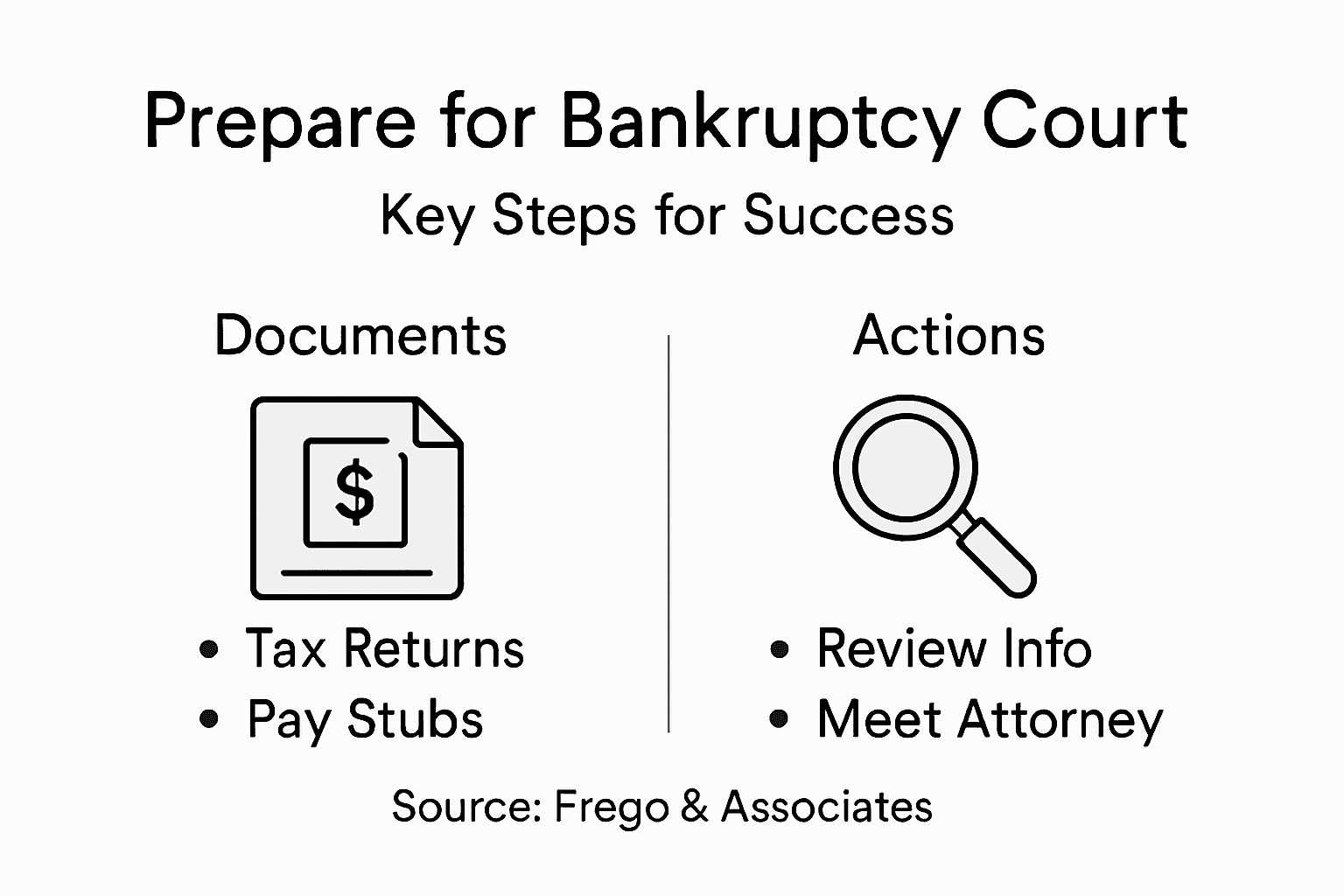
Carefully cross reference all financial documents to confirm that the information matches exactly across different forms. Verify income statements match tax returns, asset valuations are current, and creditor lists include complete and accurate contact information.
Pay special attention to the most recent financial documentation, ensuring that any changes in your financial status are reflected accurately. Check for consistency in dollar amounts, dates, and personal information such as names, addresses, and social security numbers. If you discover any discrepancies, address them immediately with your bankruptcy attorney to prevent potential legal challenges or case dismissal.
Remember that every detail matters when filing bankruptcy. Even minor inconsistencies can raise red flags with the bankruptcy court and potentially jeopardize your case. Take your time during this review process, and do not hesitate to ask your attorney for guidance if you are uncertain about any aspect of your documentation.
Pro Tip: Create a detailed checklist of all required documents and systematically verify each one against your original financial records to ensure complete accuracy.
Step 6: Prepare for Your Bankruptcy Court Appearance
Your bankruptcy court appearance represents a critical moment in your financial recovery process. Bankruptcy court procedures require thorough preparation and a clear understanding of what to expect during your hearing.
Arrive at the courthouse dressed professionally and conservatively to demonstrate respect for the legal process. Bring all original financial documents, including your government issued photo identification and social security card.
During the meeting of creditors, also known as the Section 341 meeting, you will be placed under oath and required to answer questions from the bankruptcy trustee truthfully and directly. Practice responding to potential questions about your financial situation concisely and honestly.
Common inquiries will focus on your income, assets, debts, recent financial transactions, and reasons for filing bankruptcy. Your attorney can help you anticipate and prepare for these specific questions during preparation sessions.
Remember that this hearing is not a trial but an opportunity to provide transparent information about your financial circumstances. Maintain a calm and professional demeanor throughout the proceedings, listen carefully to questions, and answer only what is specifically asked. Avoid volunteering additional information beyond the direct question, and if you are unsure about any inquiry, it is perfectly acceptable to state that you do not know or will need to verify the information.
Pro Tip: Schedule a detailed preparation meeting with your bankruptcy attorney at least one week before your court appearance to conduct a comprehensive mock interview and build your confidence.
Get Confident and Prepared with Expert Bankruptcy Guidance
Facing bankruptcy court can feel overwhelming when you must gather detailed financial documents and navigate complex legal steps like credit counseling and court appearances. This article highlights key challenges such as organizing your bankruptcy petition materials, verifying information for accuracy, and understanding the differences between Chapter 7 and Chapter 13 filings. You deserve clear answers and compassionate support to protect your financial future and rebuild your life.
At Frego & Associates, we specialize in providing Michigan residents with expert guidance through every stage of the bankruptcy process. Don’t wait until the last minute to prepare for court. Start with a free confidential bankruptcy consultation today by calling 1-800-646-0075 and take the first step toward a fresh financial start.
Frequently Asked Questions
What financial documents do I need to gather before filing for bankruptcy?
You need to collect and organize critical financial records such as tax returns for the past two years, pay stubs from the last six months, current bank statements, and documentation of all outstanding debts. Start by creating a checklist of these documents to ensure you have everything ready for your bankruptcy court filing.
How can I find a qualified bankruptcy attorney?
To find a qualified bankruptcy attorney, focus on professionals with extensive experience specifically in bankruptcy law. Schedule initial consultations with at least two attorneys to discuss your case, your financial situation, and inquire about their previous successes in handling similar cases.
What should I expect during the mandatory credit counseling course?
During the mandatory credit counseling course, you will receive a review of your financial situation from a certified counselor, covering aspects like your income, expenses, and debts. Expect the session to take about 60 to 90 minutes, and ensure you complete it before filing for bankruptcy to avoid delays.
How do I organize my bankruptcy petition materials?
Begin to organize your bankruptcy petition materials by creating a systematic filing system that sorts your financial documents by category. Make sure to label each section clearly, and create both digital and physical copies to safeguard against loss.
What are key things to verify before submitting my bankruptcy documents?
Verify that all submitted financial documents contain consistent and accurate information such as matching income declarations, asset valuations, and creditor contacts. Take time to cross-check each document against your original records to ensure complete accuracy prior to submission.
How should I prepare for my bankruptcy court appearance?
To prepare for your bankruptcy court appearance, arrive dressed professionally and bring all necessary documents, including your identification and financial records. Practice answering potential questions from the bankruptcy trustee and maintain a calm demeanor throughout the hearing.